

- The Best Vendor for Heirloom Tomato Seeds - October 13, 2026
- Ferry Morse vs Baker Creek - July 9, 2026
There is a moment in mid-August when every hour spent hauling water, pulling weeds, and pinching suckers before and after work, every day of the week, makes complete sense. For me this year, it was when I cut into my first Virginia Sweet.
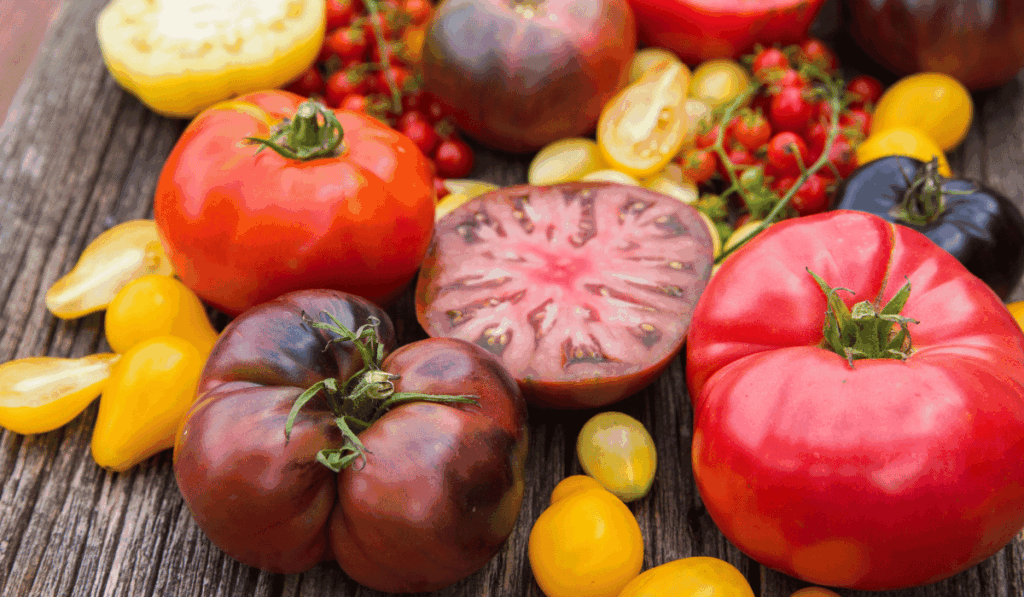
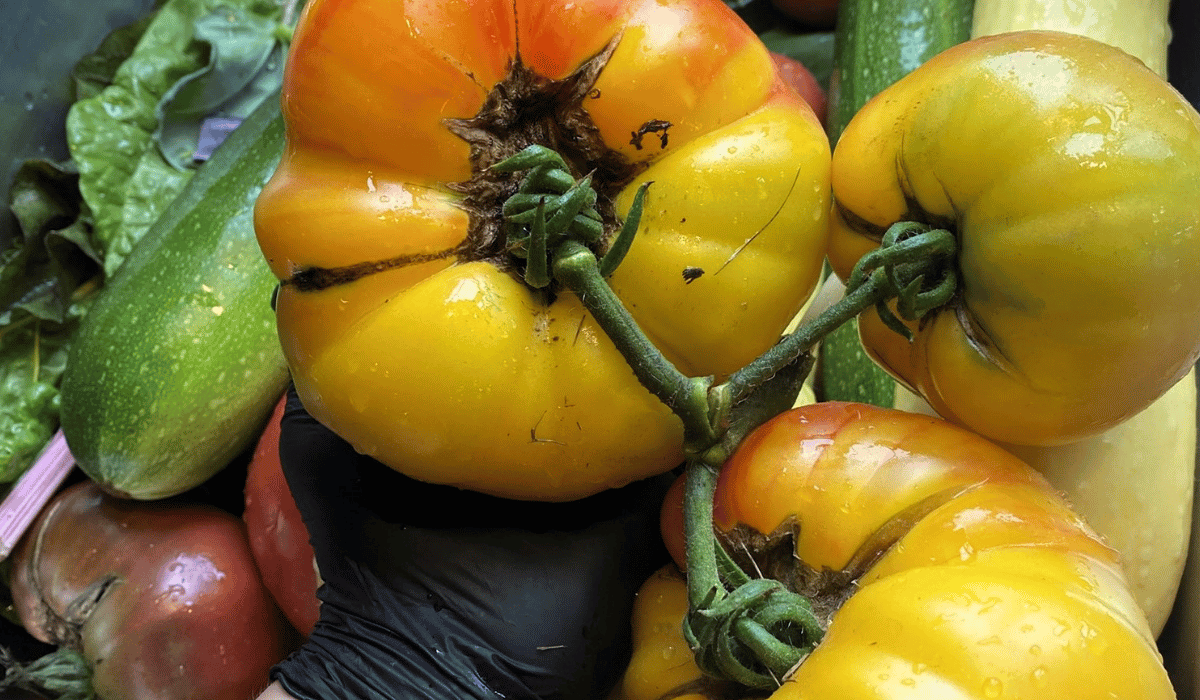
I’ve never had a beefsteak variety that grew so large, was so meaty I turned it into a meat substitute in my sandwiches for the better part of a month, and had a beautiful yellow and pale orange hue. Not once have I seen that variety in stores, so I had to find the best vendor for heirloom tomato seeds online.
Since then, I have grown dozens of heirloom tomato varieties—from the legendary Cherokee Purple and the sweet Brandywine to the quirky, ribbed Costoluto Genovese paste tomatoes. I usually start searching in winter, when I’m bored, ready for bed around 3 p.m., and huddled over seed catalogs and online seed stores.
Based on those searches, here’s my honest, firsthand roundup of the best places to buy heirloom tomato seeds.
My Core Evaluation Metrics
I judge a seed vendor based on their selection, germination, accessibility, and price.
Variety Selection
I look for vendors that offer a deep, historically significant collection of open-pollinated heirlooms. If I’m going to buy seeds, I want to be able to select for rare regional specialties, unique flavor profiles, and diverse growth habits (determinate vs. indeterminate).
Germination Reliability
Seed quality is everything. It doesn’t do any good to find a vendor with rare regional specialities if those specialties don’t germinate. I look for robust seed packets that hit high germination percentages within seven to 10 days of indoor sowing under grow lights. Low germination means wasted time and empty garden space.
Accessibility
I also look at how easy it is to get these seeds in hand. Some people want to walk down the street to a local independent garden center and grab a packet off the rack when they run out in May. Others are willing to wait (impatiently, if it’s me) a few weeks to get an online shipment.
Price
Finally, I like to check price, not just the cost per packet but also the value per seed. I calculate this based on seed count per pack, packaging durability, and whether the company offers a growth guarantee.
Quick Comparison Table
The table below shows a quick comparison of my top five picks:
| Vendor | Variety Depth | Germination Rate | Sourcing | Price Tier | Standout Feature |
| Ferry-Morse | Moderate (basic staples) | Excellent | Local retail racks | Low | Instant neighborhood retail access |
| Baker Creek | Exceptional (rare global picks) | High | Online (free shipping) and select retailers | Premium | Hyper-rare, historic heirlooms and foil packs |
| Botanical Interests | Good (curated organics) | High | Online and local nurseries | Moderate | In-depth educational guides inside the pack |
| Livingston Seed | Strong (historic lines) | Very high | Independent farm stores | Low-Moderate | Deep historical heritage |
| Norfolk Healthy Produce | Exceptional for the rarest of finds | High | Online | Premium | Norfolk Purple Tomato |
Now, let’s dive into the details.
Ferry-Morse Home Gardening
Accessible Retail Staple
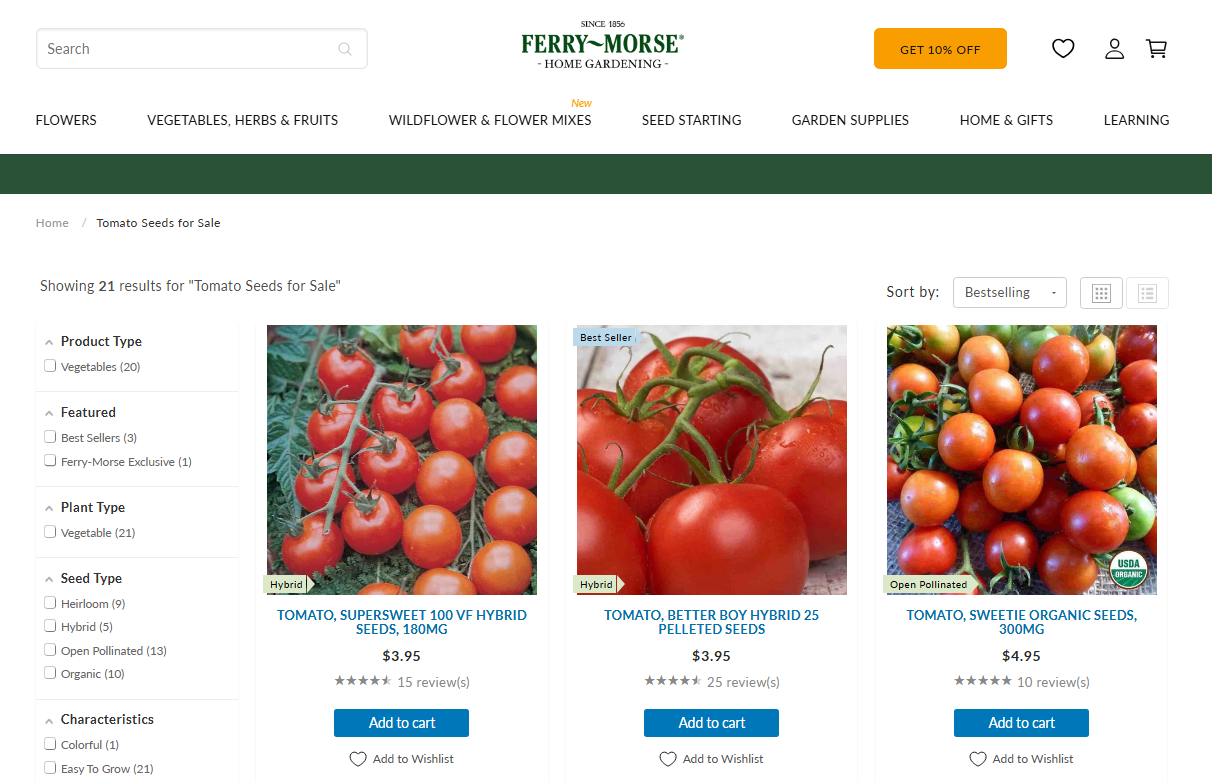
When you need immediate, reliable retail access without dealing with online shipping fees, Ferry-Morse is the absolute gold standard. They are my top pick for convenience and value. They have been a fixture in American gardening since 1856, and their physical seed racks are available in almost every local garden center and hardware store across the country.
I’m quite positive I’ve seen their seeds everywhere, from my grocery store to my garden store. If there is something I’ve forgotten, usually a staple heirloom tomato, I can find it at the same time I’m looking for toilet paper.
Ferry-Morse has it all in terms of accessibility. If it’s a sunny Saturday morning in May and I realize I accidentally stepped on my tray of tomato seedlings, I don’t have to wait a week for an online order to ship. I can jump in the car, head down the street, and pick up fresh packets directly off a local retail rack.
Variety is more limited compared to some other options. At big-box stores like Home Depot, you might have hundreds of seed packets from Ferry-Morse, but for heirloom tomatoes specifically, you’re limited to dependable, historic favorites like Beefsteak, Rutgers, Brandywine Red, and Cherokee Purple. Basically, in order to appeal to the wider demographic of box chains across the U.S., Ferry-Morse supplies things that perform well across the widest range of conditions.
Over multiple seasons, my Ferry-Morse tomato seeds have consistently hit impressive germination rates, routinely landing between 85% and 95%. This is great, but it’s juxtaposed by the price and the value.
Price-wise, Ferry-Morse is the cheapest. They have consistently affordable seeds that might be anywhere from $1 to $5 per bag but usually on the lower end. They are definitely the most budget friendly, and you can buy them anywhere, so you never have to worry about shipping costs. That said, the number of seeds you get per packet is obviously going to be more limited because of that lower price.
Tip: If, like me, you want to test a particular heirloom tomato for one season before you commit to doing it year over year, the smaller seed count with Ferry-Morse gives you the control and the value you need for a single growing season or two. I
Baker Creek Heirloom Seeds
The Collector’s Paradise
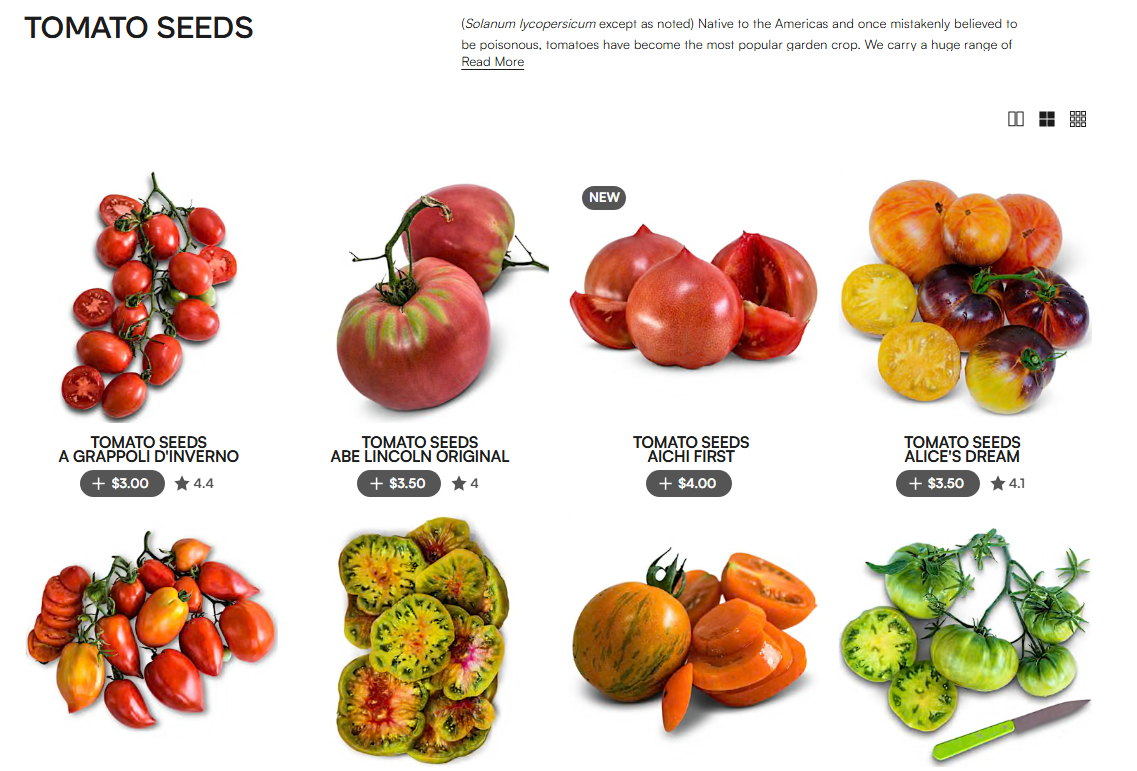
For the true heirloom purist, Baker Creek Heirloom Seeds in Mansfield, Missouri, is an absolute wonderland. They are dedicated to preserving pure, non-GMO, open-pollinated heirloom seeds from across the globe, and it shows.
Their variety is unmatched. They have a massive, gorgeous print catalog that you would be forgiven for mistaking as a historical encyclopedia. In it, they have hundreds of hyper-rare heirloom tomatoes sourced from multi-generational family farms in Italy, Ukraine, Japan, and the American South. You can find things like the striped Brad’s Atomic Grape, the deep-green Aunt Ruby’s German Green, or the massive, yellow-streaked Pineapple tomato.
Make no mistake, you’ll want that catalog because they work primarily as an online, mail-order vendor. You won’t be able to walk into a store and grab a pack of these seeds off the rack when you run out or when you realize you have an extra row available in your garden.
That said, they have a great shipping policy, perhaps one of the best I’ve seen among vendors for heirloom tomato seeds: completely free standard shipping on all domestic orders in the United States.
Yes, that’s right, free shipping—so you don’t have to hit a minimum or a maximum, and you don’t have to feel as though you are paying just as much for shipping as you are for a single seed packet.
Their prices are a lot higher than others, though, and in large part that’s because they give you a lot of rare inventory. However, when you open the seed packets, you’ll have some pretty good seed counts.
Inside each of the packets, there’s actually a heavy-duty foil layer you can use to protect any leftover seeds. This might seem like nothing if you’re brand new to gardening, but for those who are more experienced, this is a wonderful, small thing that makes all the difference. You can fold it over, seal your seeds, toss them in a sandwich bag in the fridge, and come back to them year over year.
Personally I like to group my seed packets together in individual sandwich bags when I store them in my fridge, which means all the tomato packets get grouped in a single bag. I can’t tell you how many times I’ve cut open seed packets from companies like Ferry-Morse, folded over the top of the packet, and next year, found a bunch of random seeds at the bottom of the bag that had shaken loose.
Not Baker Creek seeds, though. Baker Creek seeds stay exactly where they should.
In my indoor seed-starting setups, Baker Creek tomato seeds have shown excellent germination. Clearly, the company handles their seeds with immense care, so when they get transplanted, they grow well.
Botanical Interests
An Educational Experience
Based in Colorado, Botanical Interests is a favorite among eco-conscious gardeners who are just getting started, or just getting started with a particular variety of heirloom tomato.
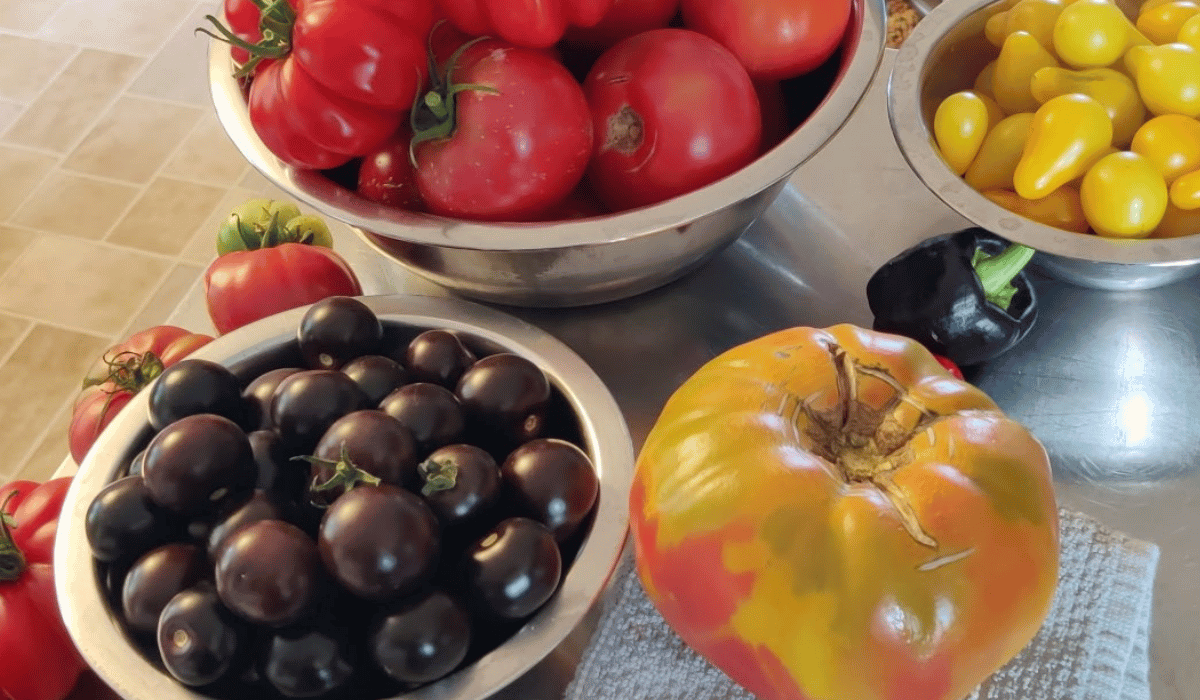
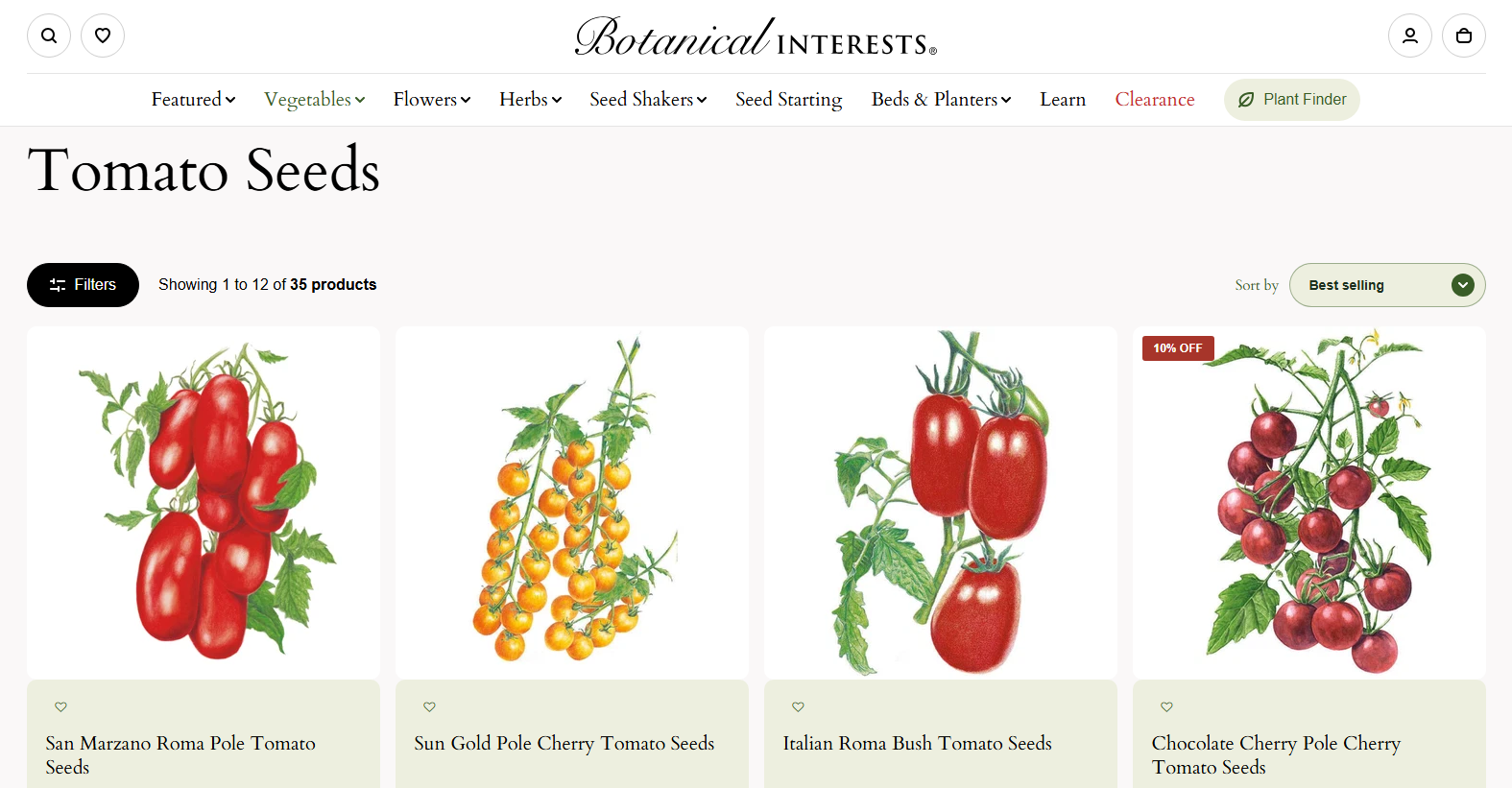
They have a beautifully curated, mid-sized selection of top-tier heirloom varieties, with a heavy emphasis on certified organic options. You can easily source heirloom strains like San Marzano (the absolute king of paste tomatoes), Black Krim, and Yellow Pear. I, myself, grew a lot of their San Marzanos and Yellow Pears. I think the Yellow Pear is my new “cherry” replacement.
I’ve had consistent, rapid germination with them, so much so that they germinate about two weeks sooner than everything else I plant at the same time (looking at all my pepper pots).
I like that you can find their seeds online OR in stores. This is a big plus for Botanical Interests, as it’s something not all heirloom vendors offer. They have a pretty robust storefront, so I can look for specific varieties online, or I can wander through a local nursery and just pick up whatever tickles my fancy that year.
Their pricing sits right in the middle; they aren’t super affordable like Ferry-Morse, but they aren’t wildly expensive like Norfolk Healthy Produce (who I’ll review shortly). The thing that makes it worth that higher price for beginners is inside the packet. When you gently unfold the packaging, you get a masterclass in tomato cultivation: detailed illustrations, specific planting depth guides, thinning instructions, history, and organic pest-management tips tailored specifically to that exact variety. I’ve saved mine just for show.
Livingston Seed Company
A Heritage Expert
As a gardener in Massachusetts, I have a deep affinity for Livingston Seed. They are heavily tied to regional agriculture, focusing their distribution on independent farm stores and local garden hubs rather than massive corporate chains.
My only issue here is that they don’t sell directly to individuals, like myself. So, if I want Livingston Seeds, I have to go track down a local farm or garden store and buy whatever they have stocked.
This leads to another potential issue, which is variety: Even though Alexander Livingston is widely regarded as the father of the modern tomato, having stabilized and introduced legendary heirloom varieties in the late 19th century, like the Livingston Globe and Livingston Beauty, there is no guarantee your local garden store will stock the Livingston Globe this coming season. Even if it does, there’s no guarantee it will be stocked next year.
You might luck out and have a good relationship in a small town such that you can request your local garden store carry specific seeds, but if those same seeds don’t sell well across a season, you still might not get them again.
Now, assuming you can get seeds, their genetic traits are highly uniform, and so are their germination rates. You get a lot of sturdy, disease-resistant plant builds.
Pricing is highly competitive with straightforward packaging, which does not include as much educational content as Botanical Interests.
Norfolk Healthy Produce
My One-Time Bioengineered GMO Tomato
I know, I know, clearly my personal gardening philosophy is deeply anchored in preserving non-GMO heirlooms, supporting pollinators, and utilizing organic practices. BUT, I found the Norfolk Purple tomato in an article online, bought seeds (at about $2 per seed a couple years back, but they are cheaper now, don’t worry) online, and carefully crossed my fingers to see if it was worth violating that philosophy for something spliced at the genetic level for greater anthocyanin levels.
Pause. Let me back up.
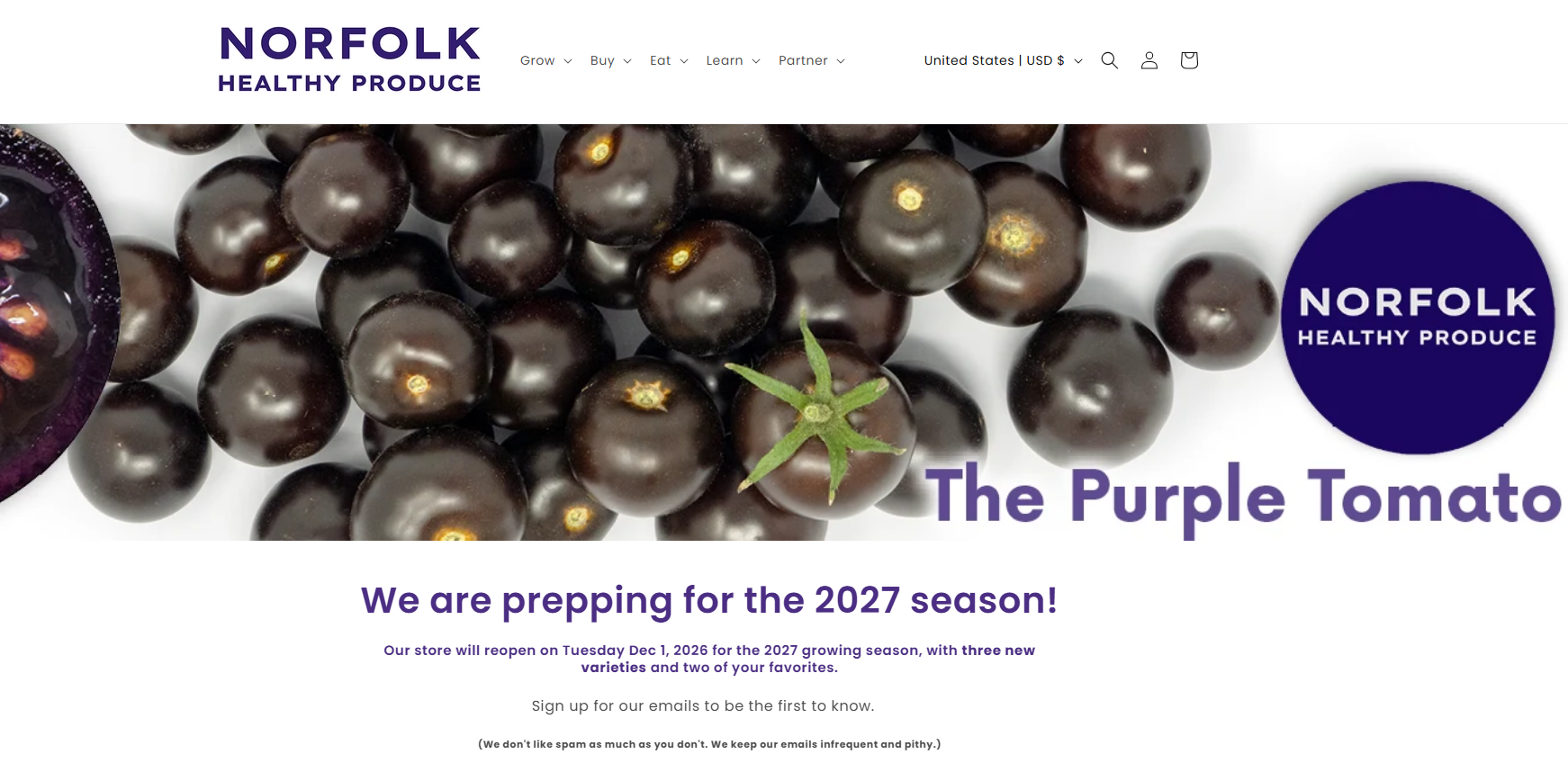
So, if you look at a classic heirloom Cherokee Purple, for example, you know it gets its name from the purple color. That color comes from natural, ancient mutations. By comparison, the Norfolk Purple from Norfolk Healthy Produce is a bioengineered GMO tomato. Scientists successfully spliced the DNA of a completely non-toxic Snapdragon flower into a domestic tomato plant.
A snapdragon.
Genetically spliced.
Oh man, this one has a deeeeeeeeeeeep purple, and not just on the outside like the Cherokee Purple, but alllllll the way through. The Snapdragon DNA triggers the tomato to produce exceptionally high levels of anthocyanins—the exact same antioxidant compounds that give blueberries and blackberries their dark pigment and superfood status.
This gives you a lot more nutritional density, and of course, it’s purple. Really purple. It looks striking when you cut into it and layer it on a bright green and purple pizza or something of the like. I have so many cans of purple spaghetti and pizza sauce!
Basically, growing Norfolk Purples is a fun way to maximize antioxidant content right at home—and impress the ever-living you-know-what out of your friends.
Tip: The Norfolk Purple tomato loses color if you try to can it or process it for too long on the stove, so you’ll have to make room in your freezer for long-term storage.
Summing Up
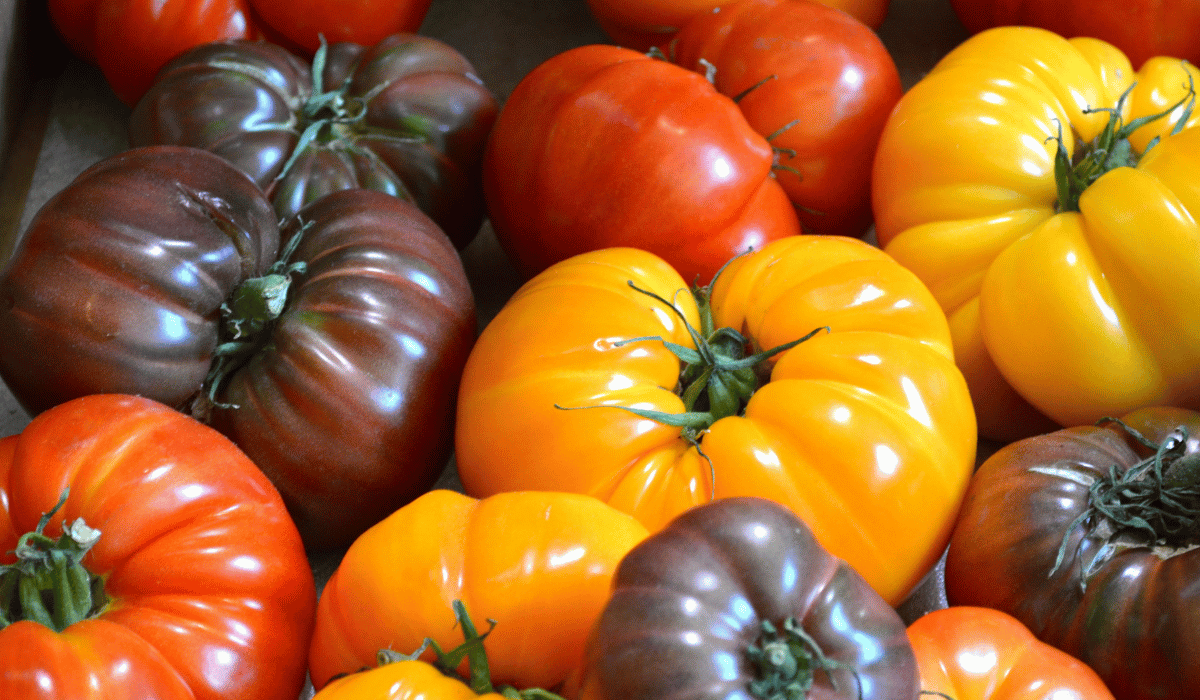
When you need a vendor for heirloom tomato seeds, you can stick to the convenient, pollinator-safe retail classics from Ferry-Morse, dive into the deep historical archives of Baker Creek, or explore modern bioengineering with Norfolk Healthy Produce. Look for what works, and prioritize what’s important for you: whether that’s philosophy, variety, price, or a blend of all three.